
Exxon: The Rise, The Missteps, and the Question No One Can Ignore
Creating Curiosity: How Does a Giant Start Slowing Down?
It’s one of those questions that sounds simple at first… and then just sits there. How does something that big, that established, that steady… start to feel a little off? Not broken. Not failing in a way you can point at and say, “there, that’s the moment.”
Just slightly out of rhythm. Like it’s still moving forward, but not quite in sync with everything around it.
That’s why the whole Exxon rise and fall idea feels strange when you actually think about it. Because it’s not really a fall. There’s no clear drop, no single turning point. It’s more like a shift you notice slowly. Almost late.
For years, Exxon Mobil Corporation was the kind of company people didn’t question. It didn’t need attention. It didn’t need to explain itself. It just… worked.
And maybe that’s where things start to change—when something works so well, for so long, that changing it doesn’t even cross your mind.
The Start: Built from Power, Not from Scratch

The Exxon success story doesn’t really start with Exxon. It starts earlier, with John D. Rockefeller and Standard Oil. And it’s difficult to fully imagine what Standard Oil actually felt like at its peak. Not just successful, but everywhere. Production, refining, transportation—it all connected back to one system.Which is exactly why it didn’t last that way. In 1911, it was broken apart. At the time, that probably felt like the end of something massive. But looking back, it feels more like that power didn’t disappear—it just spread out. Exxon came from that split. So it didn’t begin with uncertainty or trial and error like most companies. It began with structure already in place. Knowledge already built. A way of operating that had already proven itself. It didn’t need to figure everything out. It just needed to keep it going.
The Peak: When Exxon Perfected the System
If you look at the Exxon rise and peak years, especially in the early 2000s, everything feels… aligned. Not in an exciting way. More in a quiet, controlled way. Demand was growing. Prices were strong. The global economy was expanding. And Exxon had already built the kind of system that could handle that without stress. After the merger with Mobil in 1999, the company became even more structured. More integrated. Almost like everything was part of one continuous process. Under leaders like Rex Tillerson, the approach didn’t really change:
Plan long-term. Avoid unnecessary risks. Keep things efficient. No sudden moves. No chasing trends. And for a long time, that worked incredibly well.
This is where the Exxon business model stands out. It wasn’t built to impress—it was built to last. And for years, that was enough. Exxon became one of the most valuable companies in the world. Which, when you stop and think about it, says a lot about that time. Because it means oil wasn’t just important—it was central to everything.
The Failure: Not a Collapse, But a Slow Miss
The Exxon failure story doesn’t feel like failure when you look at it closely.

It feels quieter than that. more like a series of small moments where things didn’t quite line up. One event that never really leaves the conversation is the Exxon Valdez oil spill. It wasn’t just about what happened—it was about what stayed after. The image of it. The way people started seeing Exxon differently. Before that, it was mostly invisible. After that, it wasn’t. And once that shift happens, it doesn’t fully go back. But the bigger challenge came later, and it didn’t look like a crisis at the time. It looked like… change. Climate conversations became more serious. Renewable energy started becoming something real, not just theoretical. And Exxon didn’t rush. It stayed with oil and gas. Stayed with what it understood. What had worked for decades.
At the same time, things started to stack up, slowly:
It moved a bit slower during the shale boom.
It faced more pressure around environmental issues.
It felt the impact when oil prices dropped.
None of it looked like failure on its own. But together, it started to shift the position Exxon was in. Then came 2020. Exxon was removed from the Dow Jones Industrial Average. And even though that’s just an index change on paper, it didn’t feel small. It felt like something subtle, but important, had changed.
The Analysis: When Strength Becomes a Limitation
This is where the Exxon business model analysis becomes more interesting than the events themselves. Because nothing Exxon did was careless. If anything, it was the opposite.
Its strengths were always clear:
Discipline.
Consistency.
Long-term thinking.
And those are exactly the things that made it successful. But when the environment changes faster, those same strengths can start to slow you down. Exxon trusted what had always worked. And that makes sense. Most people would do the same. But the future of Exxon energy strategy depends on something slightly different now. Not just being right—but recognizing when the definition of “right” is shifting. Because timing matters more when things start changing quickly. And that’s where Exxon started to feel just slightly out of sync. Not wrong. Just… not leading the shift.
Conclusion: The Real Question Isn’t About the Past
When people talk about the Exxon rise and fall, it’s easy to turn it into a simple story.

Success, then decline. But that doesn’t really fit. Exxon succeeded. That part is clear. And it hasn’t really fallen. What’s happening now is something less obvious. Exxon Mobil Corporation is still powerful. Still relevant. Still deeply connected to how the world works.
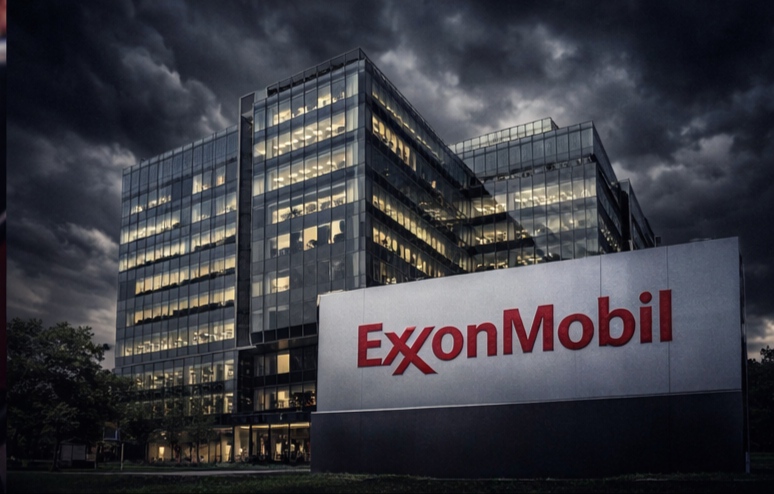
But it’s no longer unquestioned. And that changes the story. Because now, it’s not about what Exxon built. It’s about what it does next. Whether it adapts faster. Or continues trusting the system that brought it this far. And that’s what makes this moment feel different. Not because something ended. But because something is still deciding what it wants to become.