
The Rise and Epic Collapse of Yahoo: A Brutal Business Failure Story
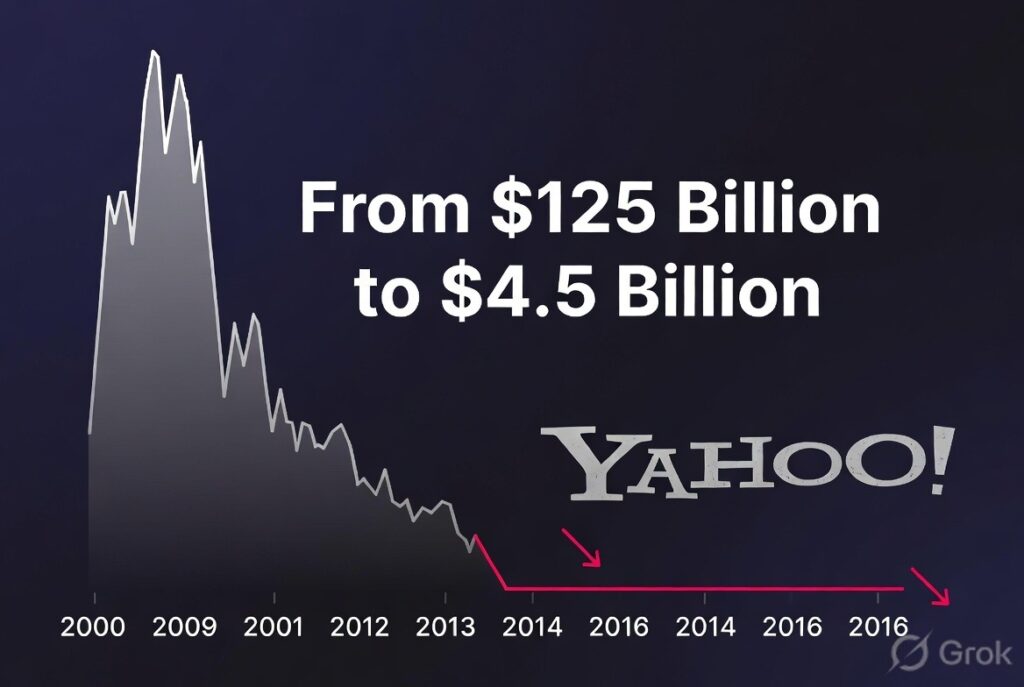
Back in the late 90s, if you turned on your computer and connected to the internet through that screeching dial-up sound, chances are the first page you saw was Yahoo. It wasn’t just a website — it was the internet for millions of people. Founded in 1994 by two Stanford graduate students, Jerry Yang and David Filo, it started as nothing more than “Jerry and David’s Guide to the World Wide Web,” a simple handmade list of interesting sites. Within a few years, it exploded into a massive portal offering email, news, chat rooms, sports scores, finance, and search. At the peak of the dot-com madness, Yahoo’s market value touched nearly $125 billion. For a short while, it was one of the most powerful companies on the planet.
Fast forward to today, and Yahoo is basically a ghost of its former self. In 2017, Verizon bought its core business for around $4.5 billion — a pathetic fraction of what it was once worth. The brand still exists, but it no longer matters in the way it used to. So what went wrong? How does a company that once ruled the web end up as a cautionary tale taught in business schools?
I’ve spent a lot of time studying corporate failures, and Yahoo’s story hits different. It’s not one big mistake. It’s a slow-motion train wreck made of arrogance, indecision, bad leadership, and a total failure to see where the internet was heading.
The Early Glory Days
Yahoo’s initial success was actually pretty simple. The web was growing like crazy, and normal people had no idea how to navigate it. Yahoo gave them a clean, human-curated directory. It felt friendly. It felt organized. They went public in 1996 and became the poster child of the dot-com boom. The company kept adding features — Yahoo Mail, Yahoo News, Yahoo Finance — turning itself into the default homepage for a generation.
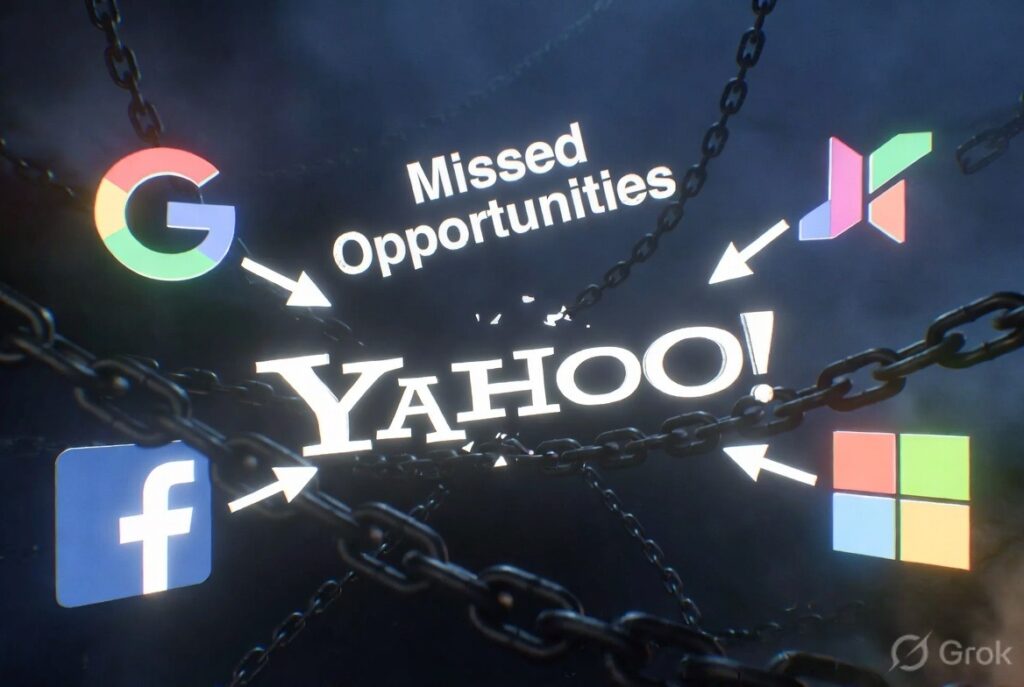
But even during the good times, the seeds of destruction were being planted. One of the most painful what-if moments in tech history happened around 1998-2000. Google’s founders, Larry Page and Sergey Brin, apparently offered to sell their search technology to Yahoo for a very small amount (reports say between $1 million to a few million). Yahoo turned them down. They thought search was just one small feature in their big portal. Why buy the whole thing when they could license it?
That single decision probably cost Yahoo the future of the internet.
Too Many Ideas, Zero Focus
As the 2000s rolled in, Yahoo started acting like it wanted to be everything for everyone. It was part media company, part tech company, part advertising business. The problem? It never truly mastered any one thing deeply.
While Google obsessed over perfecting search, Yahoo kept spreading itself thin. It bought companies left and right, but many of those acquisitions felt random and poorly integrated. The company suffered from what I call “portal thinking” — the belief that users would always want one single starting point for the entire internet. That idea worked great in 2000. It was completely outdated by 2010.
The low point of this era came in 2008 when Microsoft offered to buy Yahoo for $44.6 billion (roughly $31 per share). Jerry Yang, who was CEO at the time, basically said no. He believed Yahoo was worth way more. The deal fell apart. Yahoo’s stock kept falling, and shareholders lost billions. Looking back, accepting Microsoft’s offer would have been a graceful exit and a huge win for investors.
The Marissa Mayer Experiment
In 2012, Yahoo brought in Marissa Mayer, a star product executive from Google. Her hiring created massive hype. People thought she would bring Silicon Valley magic and turn things around. She redesigned the homepage, pushed hard on mobile, and started buying companies again — most famously Tumblr for $1.1 billion in 2013.
At first, it looked promising. But the results never came. Revenue from the old display advertising business kept shrinking. Google and Facebook were eating Yahoo’s lunch in the advertising world. Mobile execution was slow and clumsy. The Tumblr deal, which looked cool on paper, turned out to be an expensive distraction that never delivered real value.
On top of that, Yahoo had horrible security breaches in 2013-2014 that exposed the data of billions of accounts. The company waited years to fully disclose how bad they were. Trust evaporated.
Between 2007 and 2012, Yahoo went through multiple CEOs. The constant leadership changes created chaos. Employees didn’t know which direction the company was heading. Morale tanked. “Layoff Wednesdays” became a running joke inside the company.
The Real Reasons Yahoo Died
After studying this case deeply, here are the main killers:
They underestimated search: Handing the keys of search to Google was the original sin.
Identity crisis: Was Yahoo a tech company or a media company? It tried to be both and ended up mediocre at everything.
Weak execution on new trends: Social media, mobile apps, video, cloud — Yahoo was always late and half-hearted.
Toxic culture and politics: Too many meetings, too much internal competition, and not enough real innovation.
What We Can Learn in 2026
Even today, Yahoo’s failure feels incredibly relevant. Markets move faster than ever. Here’s what every founder, CEO, and manager should take away:
Focus beats diversification. Do one thing insanely well instead of ten things okay.
Never fall in love with your past success. The portal model made Yahoo rich, but it also blinded them.
Leadership stability matters. Constant CEO changes destroy momentum.
Culture is everything. Talent alone isn’t enough if people are scared, confused, or unmotivated.
Security and trust are non-negotiable. Once users stop trusting you, it’s almost impossible to win them back.
I’ve talked to several ex-Yahoo employees over the years. Almost all of them say the same thing: the talent was there. The vision at the top wasn’t. The company had multiple chances to save itself but kept choosing the comfortable path instead of the necessary one.
What’s Left of Yahoo Today?
The Yahoo you and I grew up with is mostly gone. The brand still runs email and news pages that some older users still visit out of habit. The valuable parts (especially its early stakes in Alibaba and Yahoo Japan) were spun off. The core internet business eventually landed with Apollo Global Management after Verizon.
It’s a sad ending for a company that once symbolized the wild optimism of the early internet.
Final Thoughts
Yahoo didn’t fail because the technology changed too fast. It failed because it stopped adapting to the change it helped create. In the end, it became another painful reminder that no company — no matter how dominant — is safe if it loses its hunger and clarity.
If you’re building something today, ask yourself honestly: Are we becoming the next Yahoo? Are we protecting sacred cows instead of challenging them? Are we truly obsessed with what customers need next, or are we still in love with what worked yesterday?
The internet never forgets. And business history is full of once-great names that became footnotes.
Let Yahoo’s story be a warning, not just a story.