
We Work’s Journey: From Billion-Dollar Dream to Reality Check
\Introduction
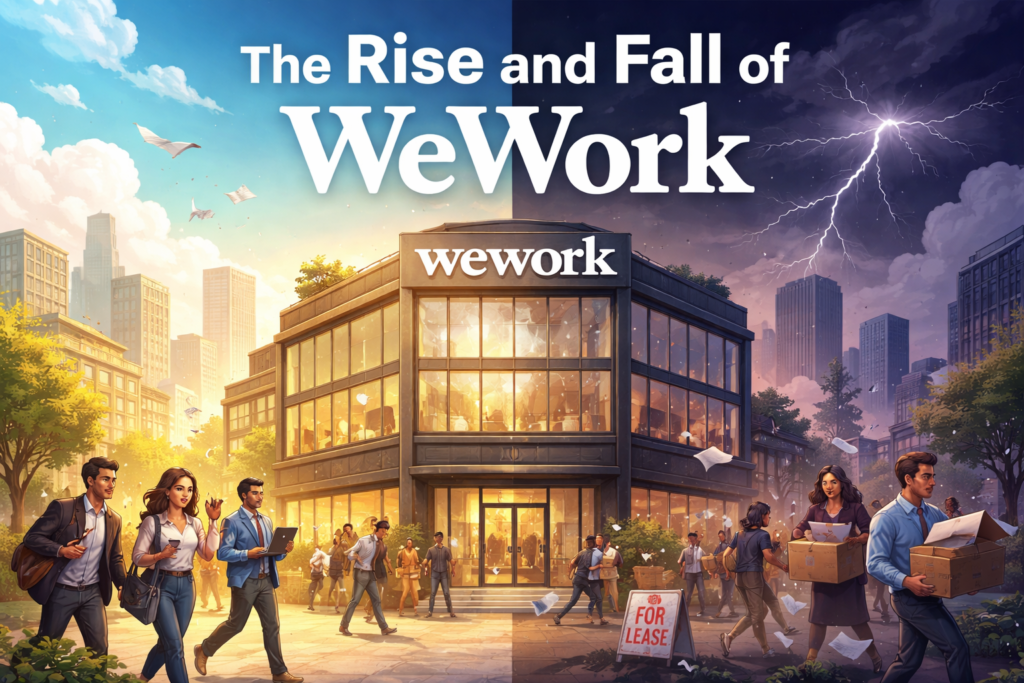
Sometimes, a business doesn’t fail because the idea is bad. It fails because everything moves too fast—faster than the company can handle. This is exactly what many startup growth vs profitability discussions highlight, and the WeWork rise and fall case study explained is one of the best examples.
That’s exactly what happened with WeWork.
If you were following startups a few years ago, you probably heard the name everywhere. It wasn’t just another company renting office space. It felt like something bigger—something exciting. People believed it would redefine work culture.
But then, things started to fall apart.
Not slowly—but all at once.
It Started With a Simple Idea
Back in 2010, WeWork introduced a concept that seemed revolutionary. Instead of long leases, it offered flexible workspaces—something now widely discussed under risks of flexible office business model.
Freelancers, startups, and companies could share modern, vibrant spaces.
It didn’t feel like work.
It felt alive.
More Than Just an Office
WeWork positioned itself as more than real estate. This is where the real estate vs tech company WeWork mistake began.
It promoted community, collaboration, and creativity. People weren’t just renting desks—they were joining a movement.
This emotional connection became a major reason behind its rapid success.
The Growth Everyone Noticed
WeWork’s expansion was explosive. Investors poured in billions, ignoring concerns often raised in dangers of overvaluation in startups WeWork case.
At its peak, the company was valued at $47 billion.
It was treated like a tech giant rather than a real estate company—one of the key startup mistakes to avoid in early stages.
The Man Behind the Vision
Adam Neumann played a huge role in shaping WeWork’s identity. His leadership is often discussed in Adam Neumann leadership style analysis WeWork.
He inspired people with big ideas and bold vision.
But this also highlighted how poor leadership affects business success when not balanced with discipline.
The Hidden Problem No One Talked About
WeWork’s business model looked simple—but it carried serious risks.
Long-term leases + short-term rentals = instability.
This is a classic example used in WeWork business model risks explained and why startups fail despite huge funding.
As long as growth continued, the problem stayed hidden.
Spending Without Limits
WeWork expanded aggressively—offices, schools, apartments, and more.
This reflects importance of financial discipline in startups and balancing vision and execution in startups.
Overspending without a clear profit path is one of the biggest startup mistakes to avoid in early stages.
The Moment Everything Changed
In 2019, WeWork filed for IPO—what should have been a milestone turned into a disaster.
The WeWork IPO failure explained simply includes:
• Massive losses
• No profitability plan
• Risky business model
• Leadership concerns
This moment exposed the impact of hype on startup valuation WeWork.
⸻
The Collapse Happened Fast
The fall was sudden.
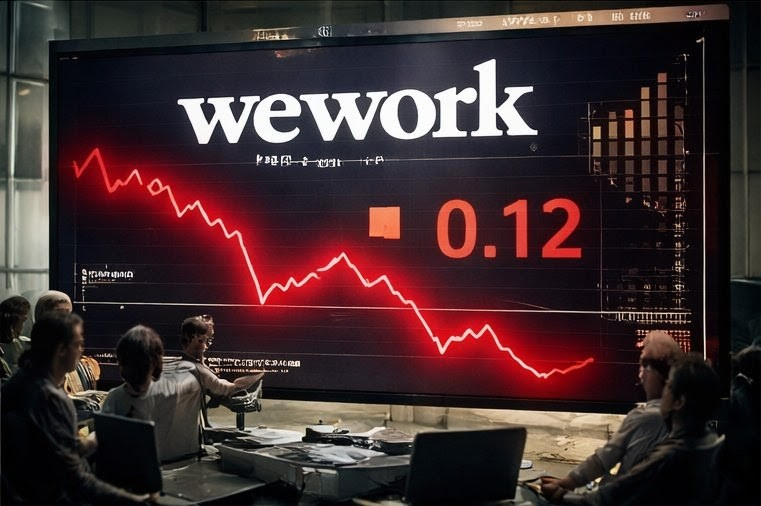
Valuation dropped drastically. Investors pulled out. The IPO was canceled.
This became a defining example in WeWork collapse timeline and key reasons.
Adam Neumann stepped down, marking a major shift.
⸻
What Went Wrong, Really?
WeWork’s failure wasn’t one mistake—it was many:
• Rapid scaling (why fast scaling can destroy startups)
• Ignoring profits (importance of sustainable business growth strategies)
• Leadership issues (how poor leadership affects business success)
• Overhype (impact of hype on startup valuation WeWork)

These are common themes in business lessons from failed unicorn startups.
The Emotional Side of Failure
WeWork wasn’t just a company—it was a belief.
Employees, customers, and investors all felt connected.
That’s why its fall felt personal, not just financial.
Is WeWork Completely Gone?
Not entirely.
The company still exists today, but in a smaller, more stable form. It has shifted focus back to its core model—something often discussed in importance of sustainable business growth strategies.
Lessons We Can All Learn
WeWork’s journey offers powerful insights:
1. Don’t scale too fast (why fast scaling can destroy startups)
2. Be clear about your business model (real estate vs tech company WeWork mistake)
3. Balance vision with execution (balancing vision and execution in startups)
4. Funding isn’t everything (why startups fail despite huge funding)
5. Stay financially disciplined (importance of financial discipline in startups)
⸻
Conclusion
The story of WeWork is not just about failure—it’s about ambition.
It shows how a simple idea can grow into something massive—and how quickly it can fall without the right foundation.
This WeWork rise and fall case study explained reminds us of one critical truth:
Success in business isn’t just about ideas or funding.
It’s about balance, discipline, and sustainable growth.
And in today’s fast-moving world, ignoring that can cost everything