The Rise and Fall of Toys “R” Us: What Really Happened, Told Straight
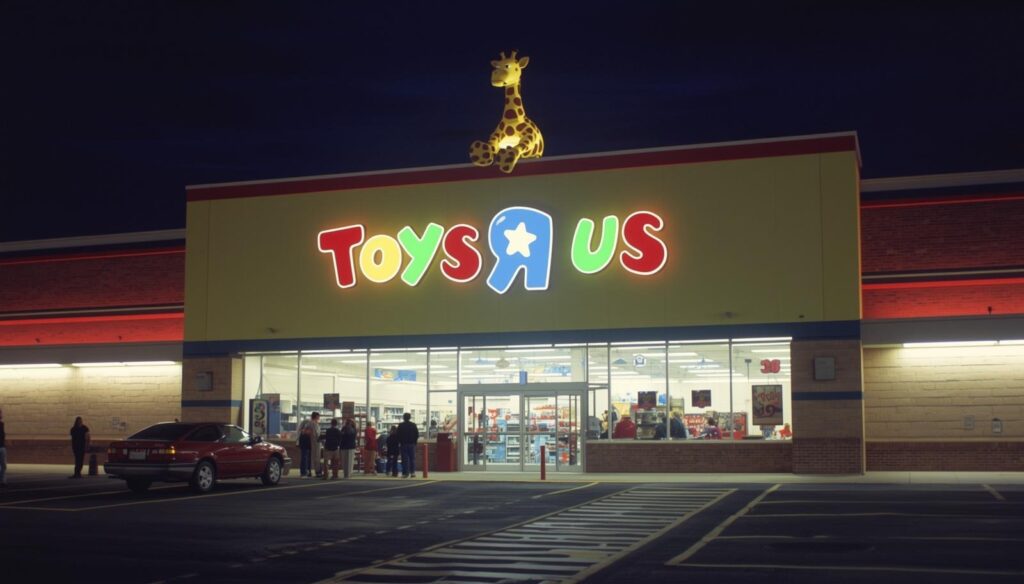
Man, I can still picture it clear as day. It’s the mid-90s, I’m probably 7 or 8, soccer cleats still muddy, and my dad goes, “Hey, wanna swing by Toys “R” Us on the way home?” My stomach would flip. We pull into that huge lot and there’s Geoffrey the Giraffe up on the roof waving like he’s been waiting just for me. Walk through the doors and bam—lights everywhere, aisles that feel like they stretch to the horizon, the smell of fresh plastic packaging and rubber bike tires mixing together. You could stand there for twenty minutes just pressing buttons on those demo toys, hearing the same cheesy electronic tune over and over while some kid nearby screams because he found the perfect Hot Wheels track. That store wasn’t shopping. It was an adventure. Every kid in my neighborhood had the same feeling.
Then one day it all disappeared. Not slowly. Just gone. By the summer of 2018 every big Toys “R” Us in the States was closed—lights off, shelves stripped, parking lots full of “Going Out of Business” signs flapping in the wind. The place that basically invented how we buy toys for kids got wiped out. People still get emotional talking about it. Parents who grew up there now have their own little ones and they feel robbed of passing on that exact experience. So how does something that big and that loved just vanish? Let me walk you through what actually went down—no corporate-speak, no fancy graphs, just the real messy truth.
How It All Began – The Lazarus Family Hustle That Worked Perfectly
It starts with Charles Lazarus right after World War II. His dad had a little bike-and-baby-furniture shop in Washington, D.C. The baby boom was exploding—everybody having kids, everybody needing cribs, playpens, high chairs. Charles helps out and notices one thing fast: parents buy toys way quicker than furniture. So he starts piling more and more play stuff on the shelves.
In 1957 he opens the first real Toys “R” Us in an old supermarket building. The name? His niece scribbled “Toys R Us” on a piece of paper and drew the R backward. They loved how kid-like it looked so they kept it. The whole idea was dead simple but brilliant for the 1950s: treat toys like groceries. Giant store, everything you could want in one place, self-service so families could wander without a salesperson hovering, open all year instead of just Christmas. Families went nuts for it. By the late 1970s they were popping stores open left and right. Went public in 1978. Added Babies “R” Us for diapers and strollers, Kids “R” Us for clothes. At the absolute peak around 2000 they had almost 1,600 stores across the planet and grabbed roughly one out of every four toy dollars spent in America. Geoffrey was on every commercial, the jingle was stuck in everyone’s head. It felt bulletproof.
The Slow Slide Starts – Too Much Growth, Way Too Much Debt
Big wins make people bold, sometimes stupidly bold. They kept building these monster 50,000–60,000 square foot stores in every suburb that looked promising. Rent was brutal, payroll was huge, and honestly not every market could support another giant toy box. They were pouring cash into square footage instead of thinking ahead.
Then comes the moment that really broke things: 2005 leveraged buyout. Three private-equity outfits—KKR, Bain Capital, Vornado—buy the company for $6.6 billion. Here’s the part most people miss: almost none of that money was their own. They borrowed more than $5 billion and slapped that debt right onto Toys “R” Us. From day one the company owed roughly $400–450 million a year in interest alone. That’s cash that could have gone to remodeling tired stores, building a fast modern website, running killer TV ads, or just matching Walmart’s prices. Instead it disappeared into loan payments. The company was basically on a short leash from then on.
Amazon Shows Up and the World Changes Overnight
While Toys “R” Us was writing those giant checks every quarter, Jeff Bezos was building something unstoppable. Amazon starts pushing toys hard in the late 90s, does a partnership deal with Toys “R” Us from 2000 to 2006, then says “we’re good” and goes full beast mode. Prime shipping, never-out-of-stock, real parent reviews, hassle-free returns—why fight holiday traffic when you can click and have it at your door in two days?
Toys “R” Us had an online store pretty early, but it was garbage. Pages took forever to load, mobile looked like it was made in 2002, hot items vanished with zero warning. They could have gone all-in—better pictures, live help, exclusive online bundles—but every extra dollar was already spoken for by the debt. Target and Walmart piled on too: rock-bottom prices, buy-online-pickup-in-store, huge catalogs. Toys “R” Us couldn’t keep up.
The physical stores started feeling stale too. Fewer staff meant messier aisles. Demo toys stopped getting fixed. The wonder kids used to feel walking in started fading. Pretty soon they were asking mom to just order from Amazon.
The Final Nail – 2017 Bankruptcy and the Fast Crash
By 2017 sales kept dropping, debt kept climbing. September 2017 they file Chapter 11, saying it’s just a reset—cut bad leases, fix the online side, come back stronger. Suppliers hear “bankruptcy” and panic. They stop shipping on normal credit terms and demand cash upfront. Holiday 2017 inventory is pathetic. Parents walk in looking for the hot Nintendo Switch bundle or the new Hatchimal and see empty pegs. They leave and never come back.
Early 2018 the restructuring loans blow up. Lenders pull out. March 15, 2018: announcement that all 735 U.S. stores will close or be sold. By June most were liquidated. Tens of thousands of jobs gone. Neighborhoods lost their big landmark. It hurt.
Where It’s At in 2026 – A Smaller Comeback
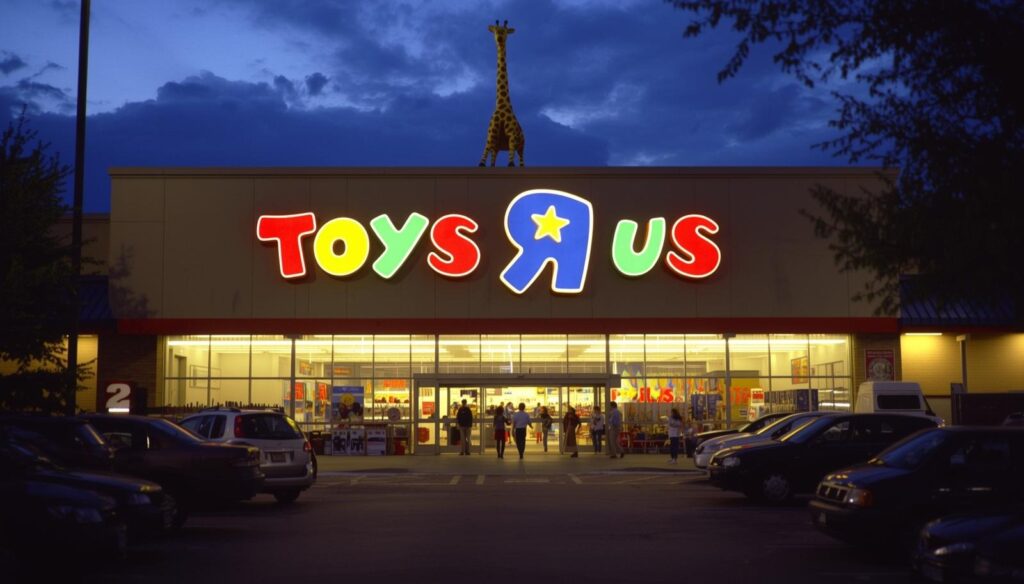
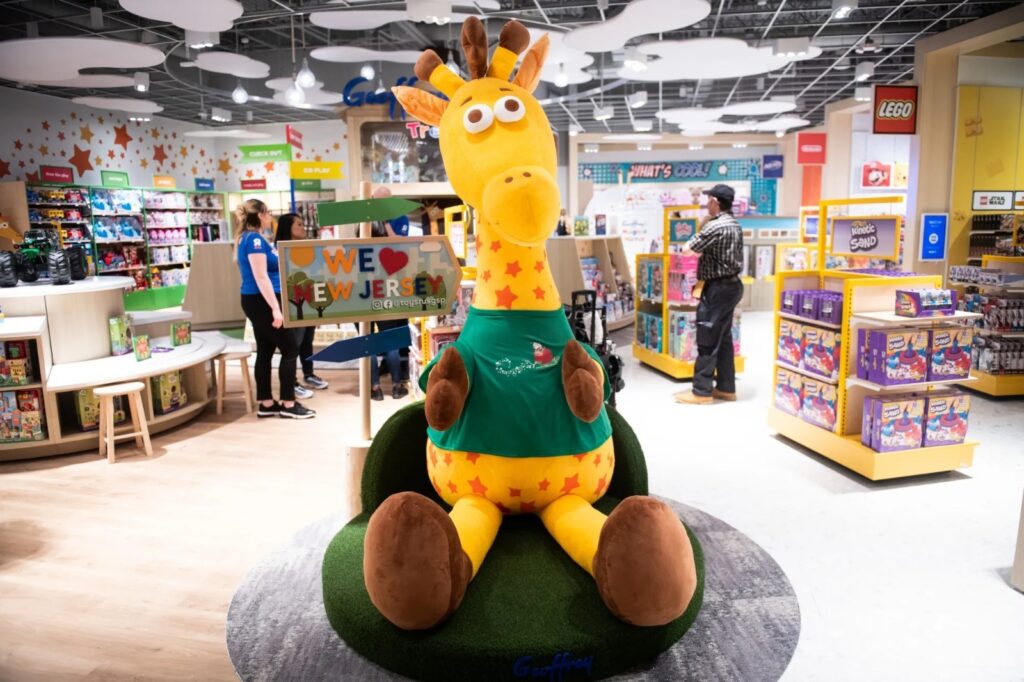
The brand didn’t die completely. After bouncing between owners the Toys “R” Us name got licensed again. You can find smaller shops now—some inside Macy’s, holiday pop-ups, a couple proper flagships in New Jersey and Texas, even airport and military-base locations. It’s not the old massive empire, but the Geoffrey nostalgia still pulls families in. Parents want their kids to feel even a little of what they felt.
Quick Lessons That Actually Stick
- Huge debt can strangle even a healthy business.
- When shopping habits shift (online, phone), you have to shift faster.
- Stores have to stay exciting—messy shelves and broken toys kill the fun.
- Past dominance doesn’t protect you forever.
- One terrible holiday season can finish you when you’re already weak.
Final Thoughts
I still get a little sad thinking about it. Not the business part—the kid part. That pure rush of walking down those aisles feeling like the world was full of possibilities. Makes you realize even the biggest, happiest things can slip away if they stop paying attention.
What about you? What’s the one toy or memory that hits you hardest when you think of Toys “R” Us? I’m genuinely curious—share it.